Constanza Sanchez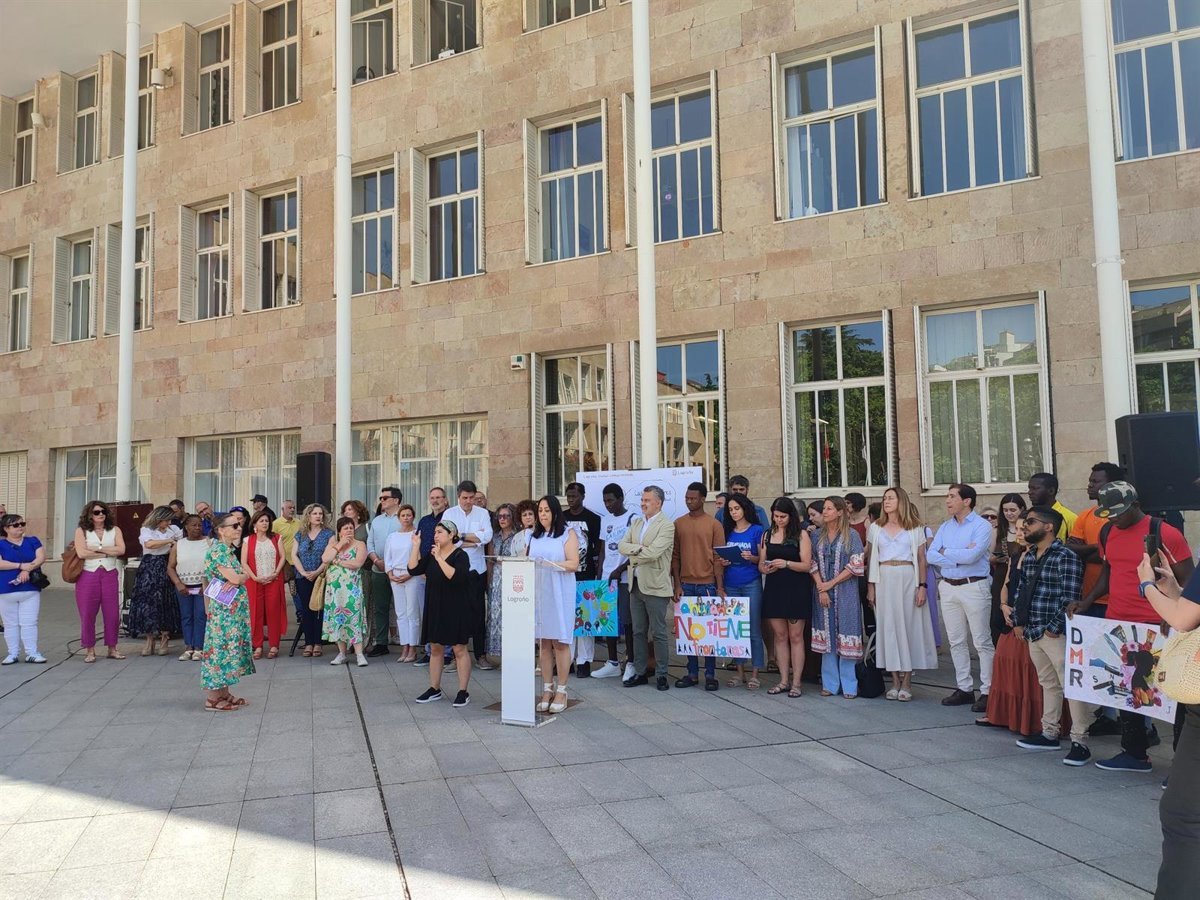
There are about 900 asylum seekers in Logroño, with more than half of them being women. For them, the call is to make our city a safe place.
The Plaza del Ayuntamiento de Logroño has hosted the monthly gathering, organized by the City Council, against gender violence called by the City Council of Logroño. This month, with the Refugee Day in focus, the attention has been on the safety of women and girls living in this situation who have been forced to leave their homes.
In the case of Logroño, it is estimated that there are around 900 asylum-seeking refugees, with more than half being women. The plea is to make our city a safe place for them.
During this Friday’s gathering, the usual reading of a manifesto was carried out, on this occasion, by organizations such as Red Cross, Rioja Acoge, Movimiento por la Paz, and ACCEM, in celebration of World Refugee Day.
The Mayor of Logroño, Conrado Escobar, along with several members of the Municipal Corporation, also spoke at the event, expressing Logroño’s commitment to fighting violence against women, especially the most vulnerable ones.
The Mayor affirmed that «defending equality, security, freedom, integrity, and dignity inherent to all individuals is a priority for this City Council.» «Logroño is a welcoming city.»
He emphasized that «violence against women is the ultimate expression of inequality and discrimination.»
«LOGROÑO IS MY FAMILY»
One of the women who sought asylum in Logroño, Claudia Rocío Cortes (from Rioja Acoge), highlighted the hospitality of the city’s residents after arriving from Colombia three years ago. «Logroño has been like a family to me on another continent, and it has been a tremendous support for me. I have felt like just another member of the Logroño family.»
She also emphasized the need to focus on the «humanitarian priority. We would like to be able to individually attend to each refugee, but even if that’s not feasible, they need to know that there are many organizations, like Rioja Acoge, and many others, that can help them, not just women, but also men because we are all human beings.»
On the other hand, the Councilor for Equality, Celia Sanz, opened the event by thanking all institutions and political groups for their support and participation in the firm rejection of violence against women. The meeting included the participation of the Logroño for Equality group, which already includes more than 60 entities.
VULNERABILITY OF REFUGEE WOMEN
The reading of the manifesto was carried out by organizations like Red Cross, Rioja Acoge, Movimiento por la Paz, and ACCEM, in celebration of World Refugee Day, commemorated today.
Thus, the organizations present at the event have made «a call to protect the rights, security, and equality of all individuals forced to leave their homes, so they have the opportunity to find protection and thrive in the host community.»
Specifically, at today’s gathering, they emphasized the reality faced by refugee women and girls. The situation of women and girls who have been forced to leave their home countries.
For refugee women, asylum seekers, and migrants, the manifesto explains, «this violence presents a more complex issue due to their special vulnerability, as they face multiple forms of discrimination (being a woman, and also a foreigner, along with other factors like cultural background, religion, irregular status, lack of social networks in Spain, language barriers, etc.).»
The inequality between men and women is prevalent in many countries, making violence appear normal and legitimate to both perpetrators and victims. Women may be persecuted for the same reasons as men, but many also face persecution for sexual violence or serious gender-related discrimination and social representation.
This persecution can come from authorities in the home country, family, or other members of society.
According to UNHCR data, which assists 20 million refugees and displaced people, 80% of the refugee population consists of women and minors, with about 1.2 million children being victims of trafficking. Over 300,000 minors have been forcibly recruited in armed conflicts, and nearly half are girls, most of whom are used as sex slaves.
Female genital mutilation affects 3 million girls annually worldwide, and one in three women has been beaten, abused, or forced into sexual relations.
Spain is among the growing number of countries that have granted refugee status based on gender persecution.